
Why Road-to-Air Mobility Is Inevitable
For more than a century, humanity has improved mobility in only two dimensions: faster roads and faster aircraft. Cars became electric. Aircraft became more efficient. But the underlying system barely changed. We still spend hours trapped in traffic. We still rely on infrastructure designed for a world with far fewer people. And despite all the advances in artificial intelligence, robotics, and energy systems, most personal transportation remains fundamentally limited to the ground.
The future of mobility will not belong exclusively to electric cars. Nor will it belong to drones. It will belong to something in between. A new category is emerging: road-to-air mobility.
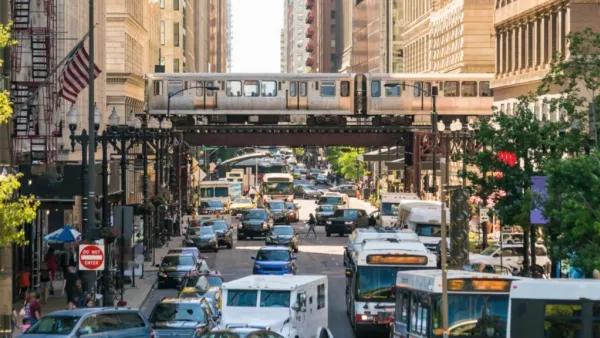
The Limits of Ground Transportation

Electric vehicles represent an important evolution. They reduce emissions, improve efficiency, and modernize the driving experience. But they do not solve the core problem:
Roads themselves are becoming the bottleneck.
Cities continue expanding. Megaregions continue growing. Commutes continue consuming enormous amounts of time, energy, and productivity. Adding more lanes has proven insufficient. Building entirely new infrastructure takes decades and billions of dollars. Meanwhile, urban congestion continues to intensify globally. At some point, mobility can no longer remain purely horizontal. It must evolve vertically.
Why Drones Alone Are Not the Answer
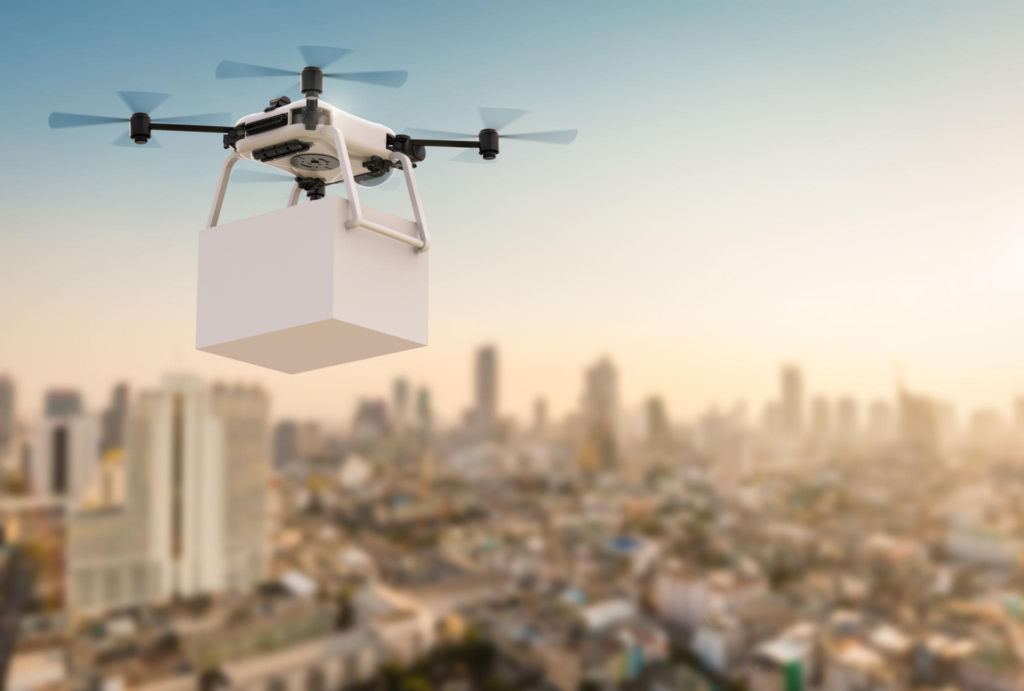
Over the past decade, drones and eVTOL concepts have attracted enormous attention. Many envision fleets of autonomous flying taxis operating above cities. But there is a critical issue often overlooked—most flying systems today are designed only for the air. That creates friction.
Passengers would still need ground transportation before and after every flight. Airports, vertiports, transfer points, logistics coordination, and regulatory complexity remain part of the equation. The result is not seamless mobility. It is fragmented mobility.
The true breakthrough happens when a single vehicle can integrate both worlds.
The Emergence of Hybrid Mobility
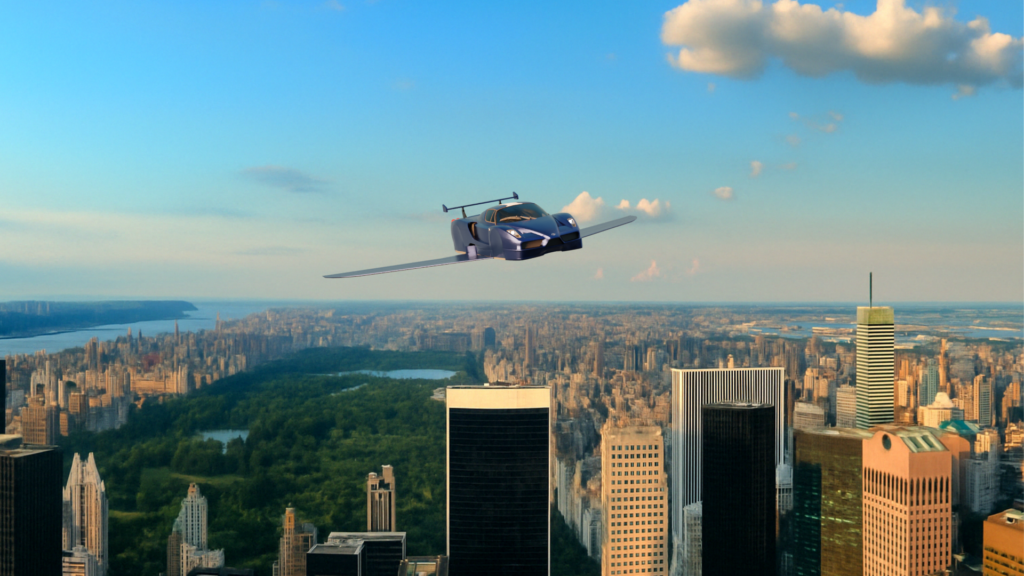
Road-to-air mobility represents the convergence of automotive engineering, aerospace technology, artificial intelligence, and energy systems into one unified experience. Instead of asking users to switch between transportation ecosystems, hybrid mobility allows a vehicle to adapt to the environment itself.
Drive on the road when roads are efficient. Fly when roads become limitations.
This is not about replacing cars. It is about expanding what a vehicle can do. In the same way smartphones merged cameras, GPS devices, computers, and communication into one platform, future mobility will likely merge terrestrial and aerial transportation into a single system.
Why Timing Matters Now
For decades, road-to-air mobility belonged mostly to science fiction. Today, multiple technological shifts are converging simultaneously:
- Advances in lightweight materials
- More efficient propulsion systems
- AI-assisted stabilization and navigation
- Improvements in battery and hybrid energy technologies
- Autonomous and semi-autonomous flight systems
- Real-time sensor processing and obstacle detection
Individually, none of these technologies change mobility forever. Combined, they create the foundation for an entirely new transportation paradigm.
The question is no longer if road-to-air mobility will emerge. The question is who will define it first.

he Psychological Shift Has Already Started

Every major transportation revolution initially sounded unrealistic. Cars once seemed dangerous compared to horses. Commercial aviation once appeared inaccessible to ordinary people. Electric vehicles were dismissed for years before entering the mainstream conversation. Road-to-air mobility is now entering that same transitional phase—skepticism mixed with fascination.
And that combination is often where transformational industries begin.
Because the deeper issue is not technology alone. It is human expectation. Once people realize that mobility no longer needs to remain constrained to roads, the perception of transportation changes permanently.
Beyond Transportation
The future of road-to-air mobility is not simply about moving faster. It is about redefining freedom, accessibility, geography, and time itself. Entire industries may transform around it:
- Luxury mobility
- Emergency response
- Tourism
- Remote connectivity
- High-performance transportation
- Premium logistics
- Defense and security applications
The implications extend far beyond commuting. This is the beginning of a new mobility layer between automotive and aviation.
The Next Era of Mobility
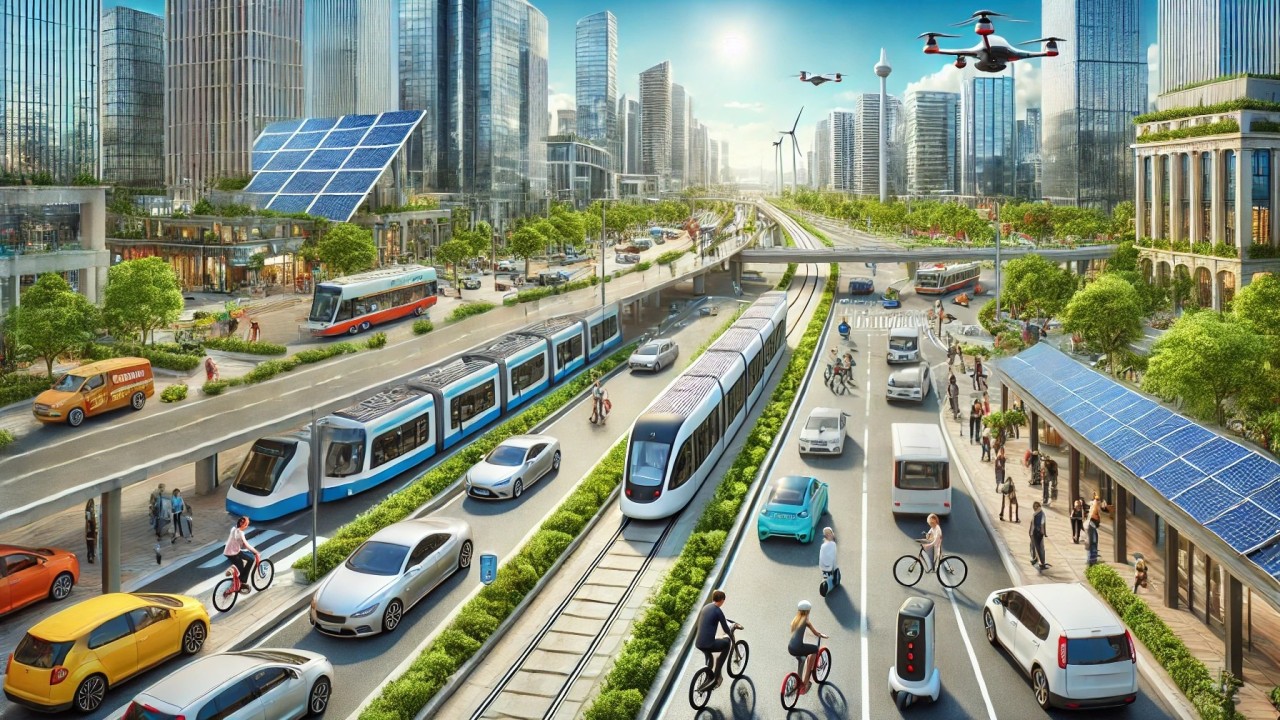
The world is approaching a point where traditional categories no longer fully apply. Cars are becoming software-driven. Aircraft are becoming increasingly autonomous. Artificial intelligence is redefining interaction between humans and machines.
The boundary between road and sky is beginning to disappear. And when that happens, hybrid mobility will no longer feel futuristic.
It will feel inevitable.
Companies that understand this shift early will not simply build vehicles. They will help define the next chapter of human transportation.
https://shorturl.fm/cTMFF
https://shorturl.fm/RnlER
https://shorturl.fm/rJL4U
https://shorturl.fm/ZpC3M
https://shorturl.fm/yfOSC
https://shorturl.fm/0HQ7r
https://shorturl.fm/clw5P
https://shorturl.fm/Dxw7U
https://shorturl.fm/a4tBJ
https://shorturl.fm/uCDhA
https://shorturl.fm/JWXVE
https://shorturl.fm/q1AvU
https://shorturl.fm/lVCkF
https://shorturl.fm/AkOSM
https://shorturl.fm/jpq4B
https://shorturl.fm/wYZ7E
https://shorturl.fm/S31bn
https://shorturl.fm/VFh7D
https://shorturl.fm/hjhny
https://shorturl.fm/BC2Ju
https://shorturl.fm/ylsNl
https://shorturl.fm/Tw4Bx
https://shorturl.fm/7T3aA
https://shorturl.fm/jNAML
https://shorturl.fm/Dq76V
https://shorturl.fm/C12km
https://shorturl.fm/i4lxN
https://shorturl.fm/65Ox3
https://shorturl.fm/YbCSz